Tina’s funeral and memorial service
All My Puny SorrowsTina’s funeral and memorial service turn a sudden family loss into an act of remembrance shaped by ritual, personal objects, and stories. After Tina’s organs failed following surgery that had seemed to go well, her family gathered to mourn her and to remember the lively, forceful person she had been. At the memorial, an unexpected incident involving her ashes briefly disrupted the proceedings but also crystallized the family’s way of carrying grief: the story continued.
Death and Its Immediate Aftermath
Tina’s surgery initially appeared successful. The doctor emerged smiling and told the family he was pleased with how it had gone. Then Tina’s organs began to fail one by one, and the efforts of the medical team could not save her. The family had expected a good outcome, making the loss all the more difficult to absorb. Frank was unable to speak, while Lottie, who had lost her closest sister and last surviving sibling, left the waiting room and leaned her forehead against a wall.
The practical arrangements followed amid shock. The Cardiology nurses gave the family a hospital property bag containing Tina’s slippers, sudoku book, novel, glasses, toothbrush, moisturizer, clothes, and shoes. The family divided its immediate tasks: Sheila went with her father to make calls and plan how to bring Tina’s body to Vancouver; Yolandi arranged groceries and coffee and contacted Nic about coming home early from Spain so Elf would not be alone; and Lottie went to speak with a funeral director about the arrangements.
Funeral and Family Remembrance
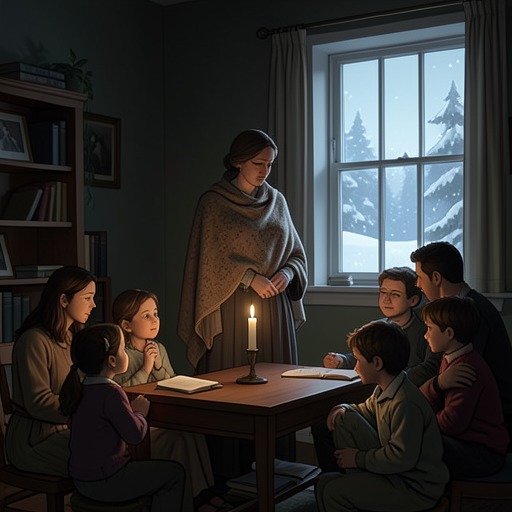
After the funeral, relatives gathered in the church dining room over ham-and-cheese sandwiches to remember Tina. Frank listened intently to each speaker, as though holding on to every detail might keep his wife close a little longer. The funeral took place in a Mennonite church, where familiar disapproving members of the community watched from one corner. Lottie and Yolandi avoided engaging with them, and the family sang hymns in four-part harmony. During one hymn, Frank turned from the front pew and gave the two women a thumbs-up; they returned the gesture.
The memorial continued with relatives taking turns on a small stage to tell stories, a Mennonite practice of communal remembrance. Sheila served as emcee. Her husband, Gordon, spoke briefly while Sheila composed herself, and then she recalled that Tina’s heart had never failed her before. Photographs displayed beside the microphone traced Tina’s life. Yolandi’s favorite showed Tina at seventeen, leaning out of her father’s Oldsmobile with a broad grin as she set off for the city. Other memories evoked her boldness and zest for life, including stories of her driving a van marked with a flame and outmaneuvering the police.
The Urn and the Continuing Story
Tina’s ashes were held in a wooden urn beside the microphone. While a relative spoke, the speaker’s toddler climbed onto the stage, opened the urn, and began handling the ashes; the child’s father soon intervened and put the lid back. The moment drew laughter from many present, though the congregation’s stern observers reacted with disapproval. The disruption did not end the memorial: Tina’s relative returned to the microphone and finished her story.
That abrupt collision between ceremony and ordinary mishap gives the memorial its defining turn. Tina is remembered through affectionate stories, but remembrance is not presented as a perfectly controlled ritual. The family continues speaking about her even when the service is unsettled, making the telling itself part of how they honor her. The scene’s comedy does not erase the loss; instead, it reveals a family able to hold grief and life in the same room.